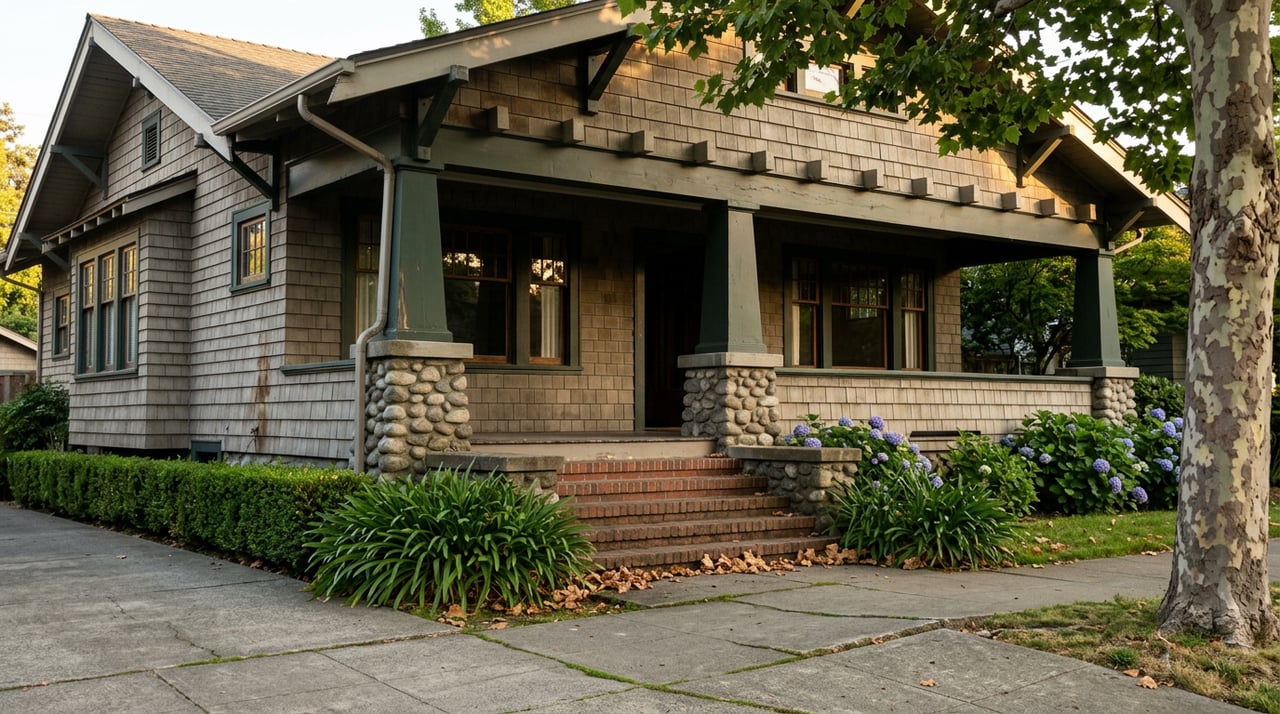
A buyer walks through a 1911 Craftsman on a shaded street north of Orange Grove Boulevard. The porch sags a little. The windows are original, wavy glass and all, and drafty in the way anyone who has lived through a Pasadena summer understands. The buyer makes a mental note: replace those windows first, maybe before move-in. It seems like the kind of decision that belongs entirely to the new owner.
It doesn't. And the reason why is the part most guides to Pasadena's historic districts skip past on their way to describing the neighborhoods.
Designation Doesn't Change the Sale. It Changes What Happens Next.
Pasadena has 31 historic districts and more than 130 individually designated landmarks and historic monuments spread across neighborhoods like Bungalow Heaven, Garfield Heights, Madison Heights, and the Prospect and South Orange Grove areas. Bungalow Heaven, the best known of these, became the city's first Landmark District in November 1989 and later joined the National Register of Historic Places in 2008. It holds more than 800 early twentieth century bungalows in a compact grid between Lake and Allen Avenues.
None of that changes whether you can buy or sell a house in the district. What it changes is what happens the first time you or a future owner tries to touch the exterior. The Bungalow Heaven Neighborhood Association's Landmark FAQ explains that many street visible changes, including replacing windows, rebuilding a porch, adding a garage, or altering rooflines, generally require a Certificate of Appropriateness (COA) from the city's Design and Historic Preservation division before a building permit can be issued. Interior work, paint color, landscaping, and mechanical upgrades that aren't visible from the street are typically exempt.
That distinction, street visible versus not, is where most of the surprises live.
The Review Only Looks Forward, Never Back
Here is the detail that rarely makes it into a listing conversation. A Certificate of Appropriateness reviews the change you propose. It does not audit the house as it currently sits. If a previous owner replaced the original wood sash windows with vinyl in 2005 without ever filing for a certificate, the city's review process has nothing to say about that at the time of your purchase. The house simply exists in whatever condition it's in.
The exposure shows up later, when that unpermitted work surfaces, whether through a future renovation application, a neighbor complaint, or routine staff review. The city can issue a stop work order and require corrective work. The City of Pasadena's historic preservation ordinance treats unpermitted alteration in a landmark district as a misdemeanor.
The Line Between Two Nearly Identical Houses
The window example keeps coming up when local agents talk about Bungalow Heaven. Window replacement is one of the most common projects in any aging house.
It also explains a pricing pattern that shows up across the district. Homes that retain original windows, woodwork, and porch details consistently draw a premium over renovated examples where those features were swapped for code compliant but historically inappropriate substitutes. As of mid-2026, Bungalow Heaven's median sale price sits around $1.4 million, up roughly 5% year over year, with homes averaging under three weeks on market. Two houses with the same square footage and the same block can land at very different numbers depending on whether the character defining features survived intact.
The Trade That Can Offset the Cost
The City of Pasadena's 2026 Mills Act guidelines describe the Mills Act as a property tax reduction available to qualifying historic properties in exchange for a contract to maintain and restore the home according to preservation standards. In Pasadena, Mills Act savings commonly range from about 20 to 75 percent, averaging near 50 percent. The contract runs for a minimum term and renews automatically each year, and it binds every successor owner, meaning it transfers with the deed.
For a buyer planning a multi year restoration anyway, that tax relief can help fund the work over time. For a buyer who wants to move fast and modernize without much thought to period detail, it's one more document to read closely before writing an offer, since walking into an existing Mills Act contract means walking into its maintenance obligations too.
Where the Districts Differ
Not every Landmark District carries the same texture, and the review process can move at different speeds depending on the scope of the project.
District | Established / Era | What Defines It | Typical Review Path |
|---|---|---|---|
Bungalow Heaven | Landmark District since 1989; homes built 1910-1917 | Over 800 Craftsman bungalows between Lake and Allen Avenues | Staff review for minor work; Historic Preservation Commission for major changes |
Garfield Heights | Homes built 1890-1918 | Craftsman bungalows alongside Queen Anne and Colonial Revival styles | According to Garfield Heights' Guidelines for Historic Preservation, staff decisions are typically issued within about ten working days for straightforward applications |
Madison Heights | Currently pursuing landmark status | Tree lined streets, early twentieth century homes, active petition process | Not yet formally designated as of this writing |
South Orange Grove / Ross Grove | Reflects Pasadena's "Millionaires Row" era from the 1890s | Largest remaining grouping of original South Orange Grove mansions | Larger scale projects typically require Commission level hearing |
Staff level decisions move fastest because they're handled at the counter by people who process these applications every week. Anything that reaches the Historic Preservation Commission, which meets on the first and third Monday of each month, moves on the Commission's calendar, not the buyer's.
Before You Write the Offer
A few steps separate a buyer who understands what they're taking on from one who finds out the hard way.
- Search the property address in the city's historic resources records to confirm whether the home is designated, contributing, or otherwise recorded.
- Ask the seller directly for the permit history and any past Certificate of Appropriateness approvals, along with whether a Mills Act contract is currently attached to the property.
- Bring your renovation plan to the Design and Historic Preservation counter before you close, not after. Staff can tell you on the spot whether a project needs a certificate and roughly which review track it will follow.
- If a Mills Act contract exists, read the actual terms. The tax benefit and the maintenance obligation are the same document.
None of this requires a specialist. It requires asking the right questions in the right order, ideally before the inspection contingency runs out.
FAQ
Does landmark district status lower a home's resale value? The city's own guidance states that landmark district designation does not affect the use or sale of a property. What it affects is the process for future exterior changes, which buyers should weigh as part of ownership cost, not resale risk.
Can I tell if a house is designated just by looking at it? Not reliably. Many contributing homes look like any other older house on the block. Confirming status requires checking the property against the city's historic resources records rather than relying on appearance or listing language.
Does painting the house or renovating a kitchen require approval? Generally no. Paint color, interior renovations, landscaping, and mechanical upgrades that aren't visible from the street are typically exempt from Certificate of Appropriateness review across Pasadena's districts.
What if I want to add an accessory dwelling unit? According to PropertyZoned's Pasadena ADU guidance, state law limits how much a historic designation can restrict ADU size and setbacks, but the city's Cultural Heritage Commission can still require that an ADU's visible exterior materials and design stay compatible with the primary home's historic character. It's worth a pre-application conversation before finalizing ADU plans on a contributing property.
A Pasadena Craftsman carries real weight in a way a newer build simply doesn't. That weight comes with a process, and the process rewards buyers who read the file before they read the paint color. If you're weighing a home in one of these districts, Carmody Real Estate can walk the specifics with you, from permit history to Mills Act terms, before you're the one holding the paperwork.
This article is general information, not legal, tax or financial advice. Consult a qualified professional about your situation.