By Carmody Real Estate
You can read this city's history off its streets if you know what to look for. A block near Ocean Park might hold a 1910s bungalow next to a 1950s post-and-beam next to something built last year, and each one is answering the same question about coastal living in a different century. We spend a lot of time explaining these distinctions to buyers, because style drives value here more than square footage does. Here's the field guide.
Key Takeaways
- Santa Monica's oldest surviving homes are Victorians and Craftsman bungalows from the early 1900s.
- Revival styles from the 1920s and 1930s still define much of the city's character.
- Mid-century modern architecture left a deep mark on the Westside.
- Contemporary coastal design now leans hard into indoor-outdoor living.
What Came First in Santa Monica?
The earliest surviving houses date to the turn of the last century, when the city was a seaside resort reachable by rail. Victorians went up first, followed quickly by Craftsman bungalows as the Arts and Crafts movement swept Southern California in the 1900s and 1910s. Both survive in pockets across the older parts of the city.
Spotting the Early Eras
- Victorian houses carry steep rooflines, decorative trim, bay windows, and vertical proportions that stand out immediately on a flat coastal lot.
- Craftsman bungalows sit low and wide, with deep front porches, tapered columns, exposed rafter tails, and built-in cabinetry inside.
- Both eras used wood floors, real plaster, and generous window openings, which is part of why they've held up.
- Ocean Park and the Pico area hold some of the better surviving concentrations of early bungalows.
Which Revival Styles Shaped the 1920s and 1930s?
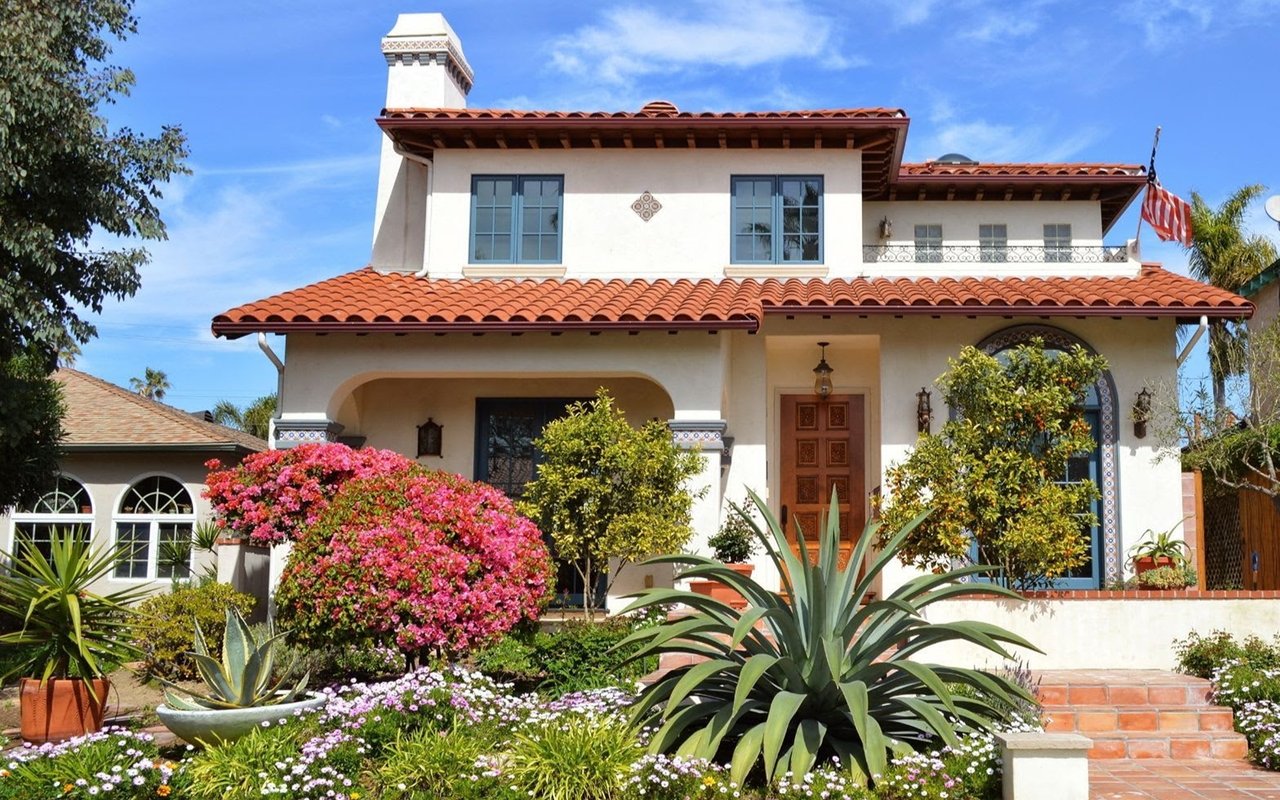
This is the era that gave Santa Monica much of its visual signature. Mediterranean Revival arrived with the region's boom years, bringing stucco walls, clay tile roofs, and arched openings that suited the climate beautifully. Colonial Revival and Monterey styles ran alongside it, and Tudor Revival shows up in scattered examples.
The Interwar Vocabulary
- Mediterranean and Mission Revival homes feature low-pitched tile roofs, smooth or textured stucco, arched windows, and wrought iron details.
- Monterey style pairs a two-story form with a cantilevered second-floor balcony running across the front.
- Colonial Revival brings symmetry, shutters, and a centered entry, often in wood siding rather than stucco.
- Courtyard plans from this era remain some of the most livable floor plans in the city, since they pull light and air into the center of the house.
Where Does Mid-Century Modern Fit In?
Right at the center of the story, because the Westside was where much of it happened. The postwar decades brought flat and low-sloped roofs, post-and-beam structure, floor-to-ceiling glass, and an emphasis on connecting interior rooms to the outdoors. Santa Monica also holds one of the most studied houses of the later modern movement, Frank Gehry's own remodeled home on 22nd Street from 1978.
Reading a Mid-Century House
- Post-and-beam framing allows long spans of glass and open interiors without many load-bearing partitions.
- Clerestory windows and skylights bring daylight deep into plans that might otherwise feel enclosed.
- Terrazzo, concrete, and wide-plank wood floors show up frequently in original condition.
- These homes reward careful updating, since the systems often need attention while the bones rarely do.
What Are Builders Doing Now?
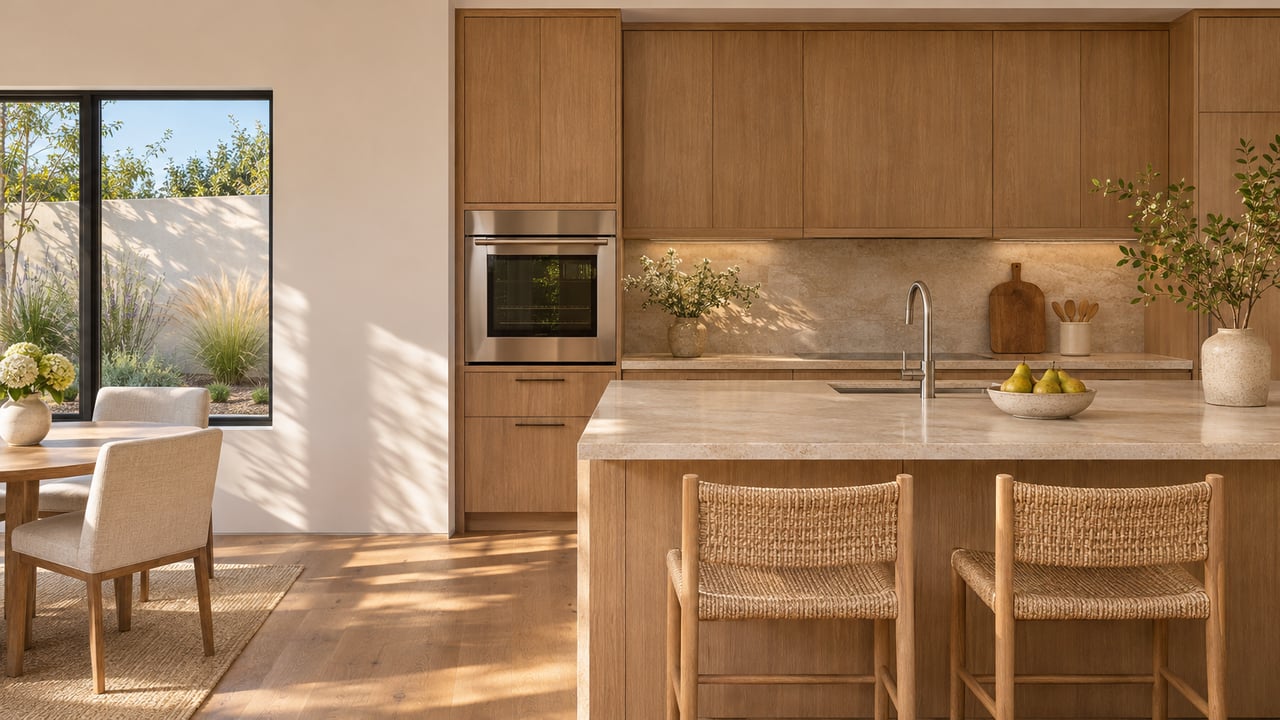
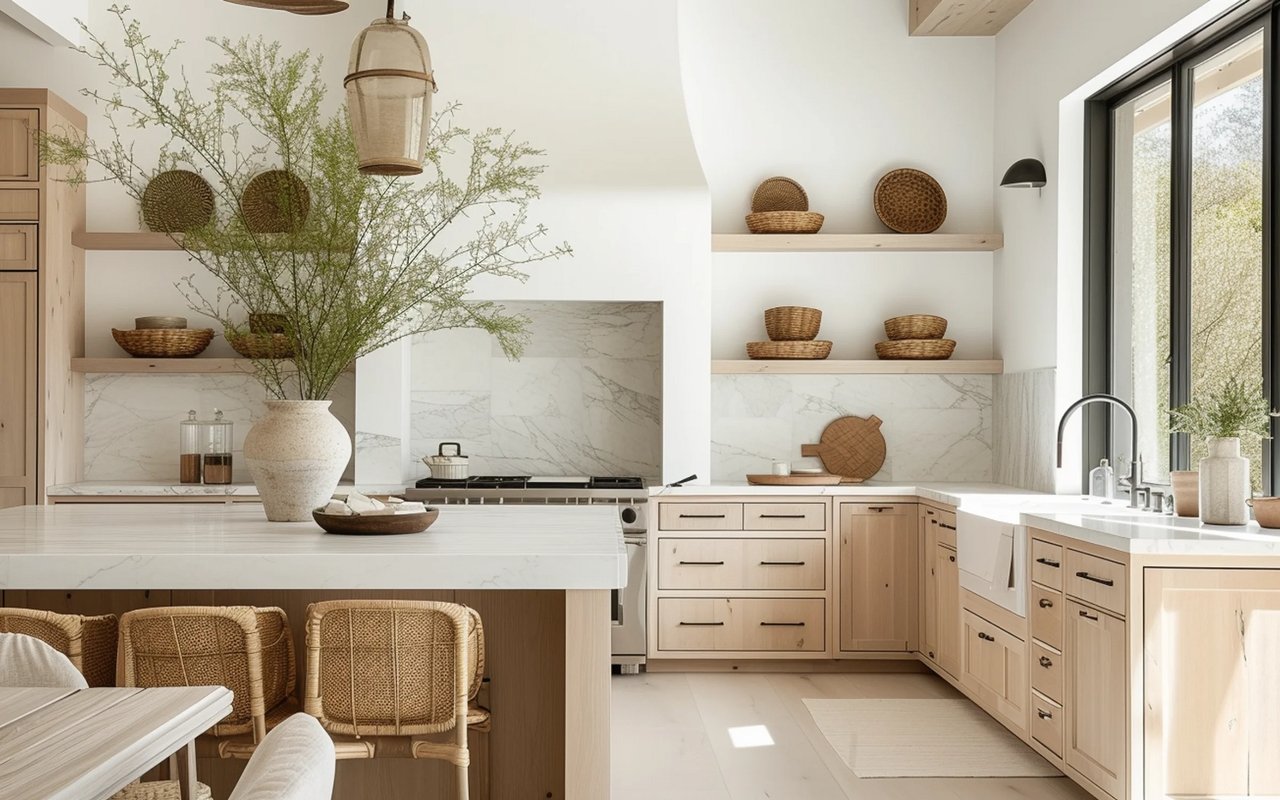
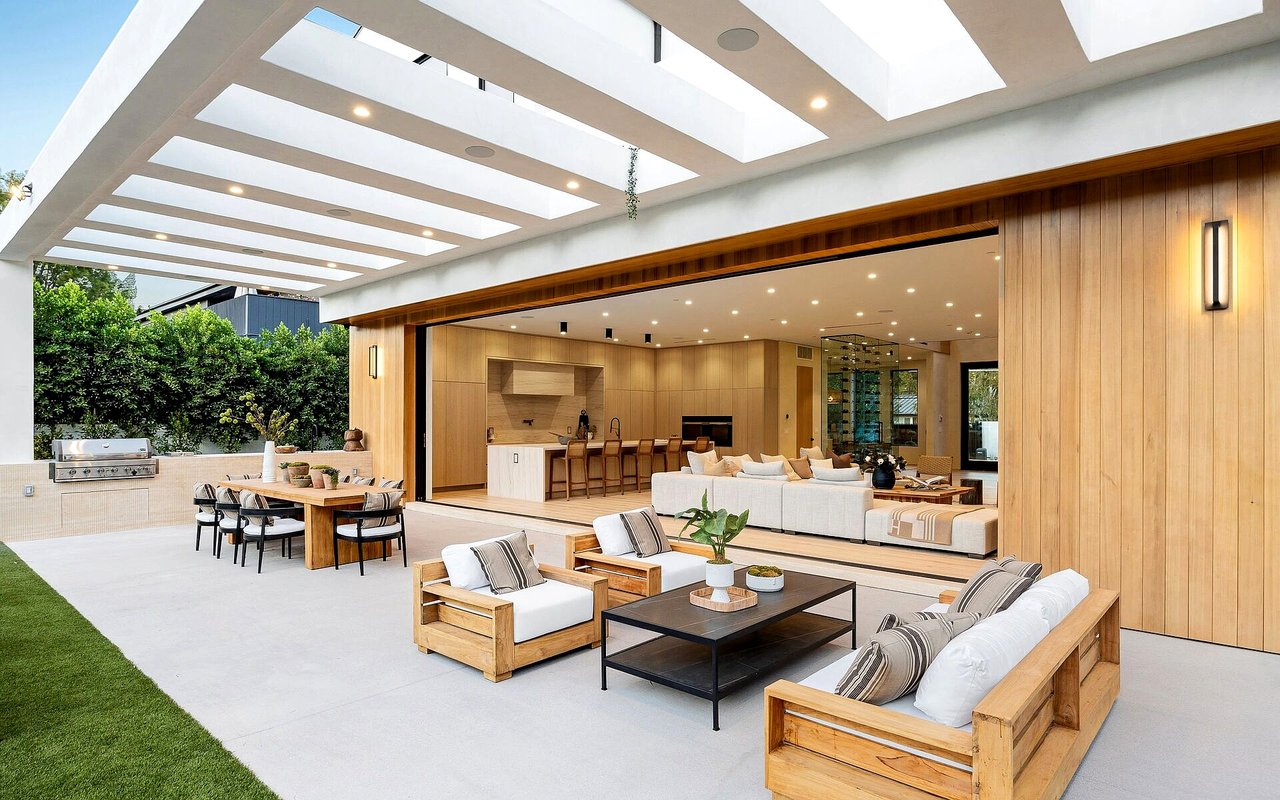
Contemporary coastal is the dominant new-construction language, and it borrows freely from what came before. Expect clean massing, large glazed openings, and a strong push toward indoor-outdoor flow with sliding wall systems and covered terraces. Materials have warmed up considerably from the stark minimalism of a decade ago.
Current Design Directions
- Natural wood, plaster, and stone finishes have largely replaced high-gloss surfaces.
- Folding and pocketing glass walls connect main living rooms directly to rear yards and decks.
- Roof decks and upper-level outdoor rooms are increasingly common on newer builds.
- Energy systems, from solar to heat pumps, are being designed in rather than added later.
Frequently Asked Questions
Which style holds value best in Santa Monica?
Honestly, condition and location outweigh style in this market. That said, well-preserved examples of any distinct era tend to draw stronger interest than an unremarkable house of the same size.
Can I modernize an older home here?
Yes, and most owners do. The city has design review and coastal permitting processes worth understanding early, and we're glad to point you toward what your project would involve.
How do I find out what style my home is?
Start with the build year and the roof form, which narrows it quickly. We're happy to take a look and tell you what you have.
Reach Out to Carmody Real Estate Today
Understanding the architecture here is part of understanding the value, and it shapes how we advise both buyers and sellers across the Westside. We know which eras draw the strongest interest on which streets, and why.
If you're buying or selling in Santa Monica, reach out to Carmody Real Estate and let's talk about your property specifically. We'd love to help you find the right fit.
If you're buying or selling in Santa Monica, reach out to Carmody Real Estate and let's talk about your property specifically. We'd love to help you find the right fit.